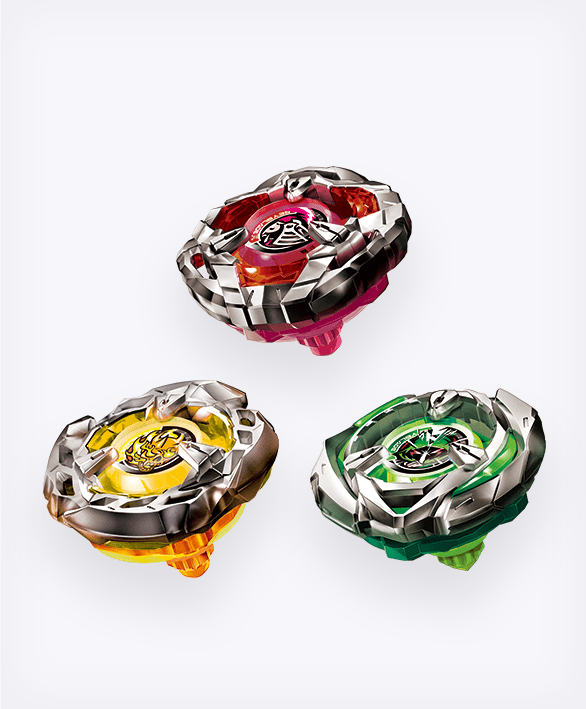
Quick answer: Phoenix Force is the Balance-type headline Beyblade of Takara Tomy's CX-20 Customize Set C, listed in its stock form as Phoenix Force WHM-65MT. The best Phoenix Force Beyblade X combos to test start with that stock build as a baseline. From there, try lower ratchets with aggressive bits for attack and taller ratchets with rounder bits for stamina, using parts such as 9-60GF and 9-80WW from other Phoenix releases.
Key takeaways
- CX-20 Customize Set C contains 4 Blades, 3 Ratchets and 6 Bits, which Takara Tomy says can make 72 different combinations.
- Phoenix Force WHM-65MT is the set's highlight, and the listing says it has metal components in its Blade, Ratchet and Bit.
- Ratchets and bits from BX, UX and CX releases are interchangeable, so parts from Phoenix Wing 9-60GF (BX-23) and Phoenix Flare 9-80WW (CX-12) fit straight onto Phoenix Force.
- There is no single best combo. The right build depends on your opponent's type and on your stadium.
- In 3on3 deck formats you can't repeat parts across your three Beyblades, so plan the Phoenix Force build around the rest of your deck.
What Is Phoenix Force in Beyblade X?
It's the centerpiece of CX-20 Customize Set C. The Japanese listing calls it a Balance-type Beyblade built for "powerful attacks and solid defense," with metal components in all three of its parts: Blade, Ratchet and Bit. Its stock designation is WHM-65MT.
Phoenix Force and the CX Custom Line
Beyblade X releases come in three product lines: BX (Basic), UX (Unique) and CX (Custom). In the CX line, the blade itself splits into several components. That means you can rebuild it beyond the usual ratchet-and-bit swaps. Phoenix Force's stock name, WHM-65MT, follows this CX naming style. We won't guess what each letter stands for, so use the parts breakdown in the CX-20 instructions to identify every component before you start swapping.
Here's what the official listing confirms:
- Type: Balance
- Stock build: WHM-65MT
- Metal parts: Blade, Ratchet and Bit all include metal components
- Release: CX-20 Customize Set C, Takara Tomy, BEYBLADE X series
The listing doesn't give Phoenix Force's weight or spin direction, so we won't quote them here. Weigh your own copy on a 0.01 g scale. You'll want that number in your test log anyway, because every ratchet or bit swap changes it.
Where Phoenix Force Sits in the Phoenix Family
Phoenix Force is the newest addition to a Phoenix lineup that spans all three Beyblade X lines:
- BX-23 Phoenix Wing 9-60GF: Basic line starter
- BX-00 Phoenix Wing 9-60GF Metal Coat: Black (Tatsuya Kitani Ver.): collector variant of Phoenix Wing
- UX-07 Phoenix Rudder Deck Set: includes Phoenix Rudder 9-70G
- CX-12 Booster Phoenix Flare 9-80WW: Custom line booster
- CX-20 Customize Set C: Phoenix Force WHM-65MT
The older releases give you three Phoenix-branded ratchet heights to test with: 9-60, 9-70 and 9-80.

What Comes in CX-20 Customize Set C?
CX-20 Customize Set C contains 4 Blades, 3 Ratchets and 6 Bits. Takara Tomy says these can be combined into 72 different builds. Phoenix Force WHM-65MT is the featured Beyblade, and the other parts give you swap options right out of the box.
Box Contents at a Glance
| Component | Quantity | Notes from the listing |
|---|---|---|
| Blades | 4 | Includes Phoenix Force, the set's highlight |
| Ratchets | 3 | Includes Phoenix Force's metal-component ratchet |
| Bits | 6 | Includes Phoenix Force's metal-component bit |
| Possible combinations | 72 | 4 Blades × 3 Ratchets × 6 Bits |
Beyblade Kingdom carries the Japanese Takara Tomy release (product code CX-20) as a pre-order. The listing describes contents in terms of blades, ratchets and bits only. Check the product page for the full parts list and current release details before assuming a launcher or other accessories are included.

How a Customize Set Differs from Boosters and Starters
Each box type is built for a different purpose:
- Starter (e.g., BX-23 Phoenix Wing 9-60GF): one complete Beyblade plus a launcher
- Booster (e.g., CX-12 Phoenix Flare 9-80WW): one complete Beyblade, no launcher
- Customize Set (e.g., UX-10 Customize Set U, CX-20 Customize Set C): several blades, ratchets and bits in one box, made for mixing
With CX-20, the 6 bits outnumber the 3 ratchets two to one. So the quickest way to start is to keep Phoenix Force on one ratchet and rotate through bits. Change one part at a time, or you won't know which swap made the difference.

Best Phoenix Force Beyblade X Combos to Test
Test four builds: the stock WHM-65MT baseline, a low 9-60 attack setup, a taller 9-80 stamina or balance setup, and Phoenix part swaps that mix ratchets and bits from Phoenix Wing and Phoenix Flare. Treat each one as an experiment, not a proven tournament pick.
A simple test method keeps your results comparable:
- Use the same stadium and the same launcher for every build.
- Run a fixed number of battles per matchup, such as 10, against at least one attack, one stamina and one defense opponent.
- Record every finish type: Xtreme Finish (3 points), Over Finish (2), Burst Finish (2) and Spin Finish (1).
- Note the total weight of each build and anything unusual, like wobbling or self-KOs into the Xtreme Line.
Build 1: Stock Phoenix Force (Your Baseline)
Run Phoenix Force exactly as it comes in CX-20: WHM-65MT. Takara Tomy pitches it as a Balance type that combines attack and defense, and your baseline log is where you check that claim. Watch two things. First, how many points it scores against attackers. Second, whether it loses on Spin Finish against stamina types. Every later build is judged against these numbers.
Build 2: Low-Ratchet Attack Setup
Try Phoenix Force on 9-60GF, borrowing the ratchet and bit from BX-23 Phoenix Wing. In Beyblade X ratchet names, the second number is the height (60 is lower than 80). As a general rule, a lower ratchet paired with an aggressive bit favors attack and Xtreme Line hits. Launch at an angle so it rides the rail. Then compare its Xtreme Finish count against the stock baseline.
Replacing the metal-component stock ratchet and bit with Phoenix Wing's parts changes the weight. Weigh the build before you draw conclusions.
Build 3: Stamina / Balance Setup
Move Phoenix Force onto the taller 9-80 ratchet from CX-12 Phoenix Flare. Pair it with the roundest, lowest-friction bit you own, which could be one of the six bits in CX-20. Taller ratchets and rounder bits are the classic stamina and defense pairing: the Beyblade sits in the center and outlasts its opponent. Judge this build mostly on Spin Finishes won and how often it gets knocked out by attackers.
Build 4: Phoenix Parts Swap (9-60GF and 9-80WW from Other Phoenix Releases)
If you collect Phoenix releases, you already have a small parts library. Because all three Phoenix ratchets share the "9" profile, height becomes the main thing you're changing between them. Here are some cross-combinations to log:
- Phoenix Force on 9-60WW: Phoenix Wing's low ratchet with Phoenix Flare's bit
- Phoenix Force on 9-80GF: Phoenix Flare's tall ratchet with Phoenix Wing's bit
- Phoenix Force on 9-70G: Phoenix Rudder's stock ratchet and bit from UX-07, a mid-height option
- Phoenix Force on 9-60 or 9-80 with its stock MT bit: keeps the metal-component bit and changes only the height
Only the stock ratchet-and-bit pairings are confirmed by product titles. Everything above is a test idea, not a recommended meta combo.
Which Ratchet and Bit Suit It Best?
No single ratchet and bit is best for every matchup. Lower ratchets with aggressive bits suit attack-heavy play, while taller ratchets with stable, rounder bits suit stamina and defense. Pick based on your opponents, your stadium and how consistently you launch.
Choosing Ratchet Height
- 9-60 (BX-23 / BX-00 Phoenix Wing): the lowest Phoenix option, for attack contact
- 9-70 (UX-07 Phoenix Rudder): a middle ground if 60 feels too low and 80 too passive
- 9-80 (CX-12 Phoenix Flare): the tallest Phoenix option, for stamina setups and for changing contact height against opponents that hit low
- Stock 65 ratchet (CX-20): the metal-component original. Keep it whenever you want to isolate a bit change
Choosing a Bit for Your Stadium and Launch Style
Aggressive bits need strong, angled launches to reach the Xtreme Line, and they reward contact there with 3-point Xtreme Finishes. Stable bits suit center camping and pair well with taller ratchets. Two outside factors shift results more than most players expect:
- Launcher type: the same build can behave differently from different launchers. Don't switch launchers mid-test.
- Stadium surface: a worn stadium and a new one can produce different finish rates. Note which stadium you used.
How Does It Compare to Phoenix Wing and Phoenix Flare?
Phoenix Wing 9-60GF is a BX Basic line release, Phoenix Flare 9-80WW is a CX Custom line booster, and Phoenix Force WHM-65MT headlines the CX-20 Customize Set. For Phoenix Force combos, Wing and Flare mainly act as sources of extra ratchet heights and bits.
| Release | Beyblade (stock) | Line | Box type | Parts it adds for Phoenix Force testing |
|---|---|---|---|---|
| BX-23 | Phoenix Wing 9-60GF | BX (Basic) | Starter | 9-60 ratchet, GF bit |
| BX-00 | Phoenix Wing 9-60GF Metal Coat: Black (Tatsuya Kitani Ver.) | BX (Basic) | Collector variant | Same 9-60GF part names as BX-23 |
| UX-07 | Phoenix Rudder 9-70G | UX (Unique) | Deck Set | 9-70 ratchet, G bit |
| CX-12 | Phoenix Flare 9-80WW | CX (Custom) | Booster | 9-80 ratchet, WW bit |
| CX-20 | Phoenix Force WHM-65MT | CX (Custom) | Customize Set | Stock build plus the set's other blades, ratchets and bits |
Phoenix Wing 9-60GF (BX-23)
Phoenix Wing's 9-60GF is the low-ratchet half of most Phoenix Force attack tests. The BX-00 Metal Coat: Black (Tatsuya Kitani Ver.) shares the same 9-60GF name. It's a collector piece rather than a source of new test parts, so if you already own BX-23, BX-00 adds display value, not a new ratchet or bit.
Phoenix Flare 9-80WW (CX-12)
Phoenix Flare is the other CX Phoenix and the easiest way to get a 9-80 ratchet into your Phoenix testing. Since it's a booster, it comes without a launcher. That suits players who already own one and just want parts.

Which Phoenix Should You Add First?
- You want attack builds: add BX-23 for 9-60GF.
- You want stamina or balance builds: add CX-12 for 9-80WW.
- You want a mid-height option plus extra deck pieces: UX-07 brings Phoenix Rudder 9-70G alongside two other blades.
- You collect display pieces: BX-00 Metal Coat: Black.
For wider meta context, including which blades, bits and ratchets keep appearing in winning combos, see our Beyblade X Tier List 2026.

How Do You Build a 3on3 Deck Around Phoenix Force?
Give Phoenix Force one clear role, then fill the other two slots with different types. Make sure no blade, ratchet or bit repeats across all three. Whichever ratchet and bit Phoenix Force uses are no longer available to your other two Beyblades.
Assigning Phoenix Force a Role
Two simple templates:
- Balance anchor: Phoenix Force in stock WHM-65MT form, plus one dedicated attacker and one stamina type.
- Attack slot: Phoenix Force on 9-60GF, plus one defense type and one stamina type.
For the other two slots, our Luster Dragoon 6-60LC combo guide and Brachio Whip OW5-70Nr review cover builds and deck examples you can check against your Phoenix Force pick.

Avoiding Part Overlap with Your Other Two Beyblades
Phoenix collectors fall into an overlap trap more easily than most players:
- If Phoenix Force borrows 9-60GF, you can't also run Phoenix Wing on its stock 9-60GF in the same deck.
- If Phoenix Force takes 9-80, Phoenix Flare needs a different ratchet.
- Duplicates count even when they come from different boxes. Two 9-60 ratchets are still the same part.
Lock in Phoenix Force's build first, then list the remaining ratchets and bits you own before choosing the other two Beyblades. CX-20's 3 Ratchets and 6 Bits help here, because they give you spare parts that don't clash with your Phoenix parts.
Beyblade Kingdom ships the authentic Japanese Takara Tomy CX-20 Customize Set C worldwide from Japan. Our CX-20 Customize Set C pre-order guide explains how reserving it works from overseas and what the listing confirms.
FAQ
What is the best Phoenix Force combo?
No single combo is best in every matchup. Start with the stock WHM-65MT build as your baseline. Then test a lower 9-60 ratchet with an aggressive bit such as GF for attack, and a taller 9-80 ratchet with your roundest, lowest-friction bit for stamina. Choose based on which build scores best against the opponents and stadium you actually play.
Is Phoenix Force sold on its own or only in CX-20 Customize Set C?
The Takara Tomy listing presents Phoenix Force WHM-65MT as the highlight of CX-20 Customize Set C. We have no confirmed information about a standalone release, so CX-20 is the release to look for if you want it now.
Can I use BX and UX ratchets and bits on Phoenix Force?
Yes. Ratchets and bits are interchangeable across the BX, UX and CX lines. The listing says the stock ratchet and bit contain metal components, so swapping in plastic parts will change the total weight. Weigh each build and note it in your test log.
Does the Phoenix Wing 9-60GF ratchet and bit work well with Phoenix Force?
The parts fit, and 9-60GF is a good first test for a lower, attack-focused setup. How well it performs depends on your launch, your stadium and your opponents, so run it against the stock build over the same number of battles and compare finish types.
Is the Japanese Takara Tomy CX-20 different from an English Hasbro release?
We can only confirm that Beyblade Kingdom stocks the Japanese Takara Tomy CX-20 Customize Set C. We don't have verified information on a Hasbro equivalent or how it would differ, so compare listings carefully before assuming the parts or contents match.